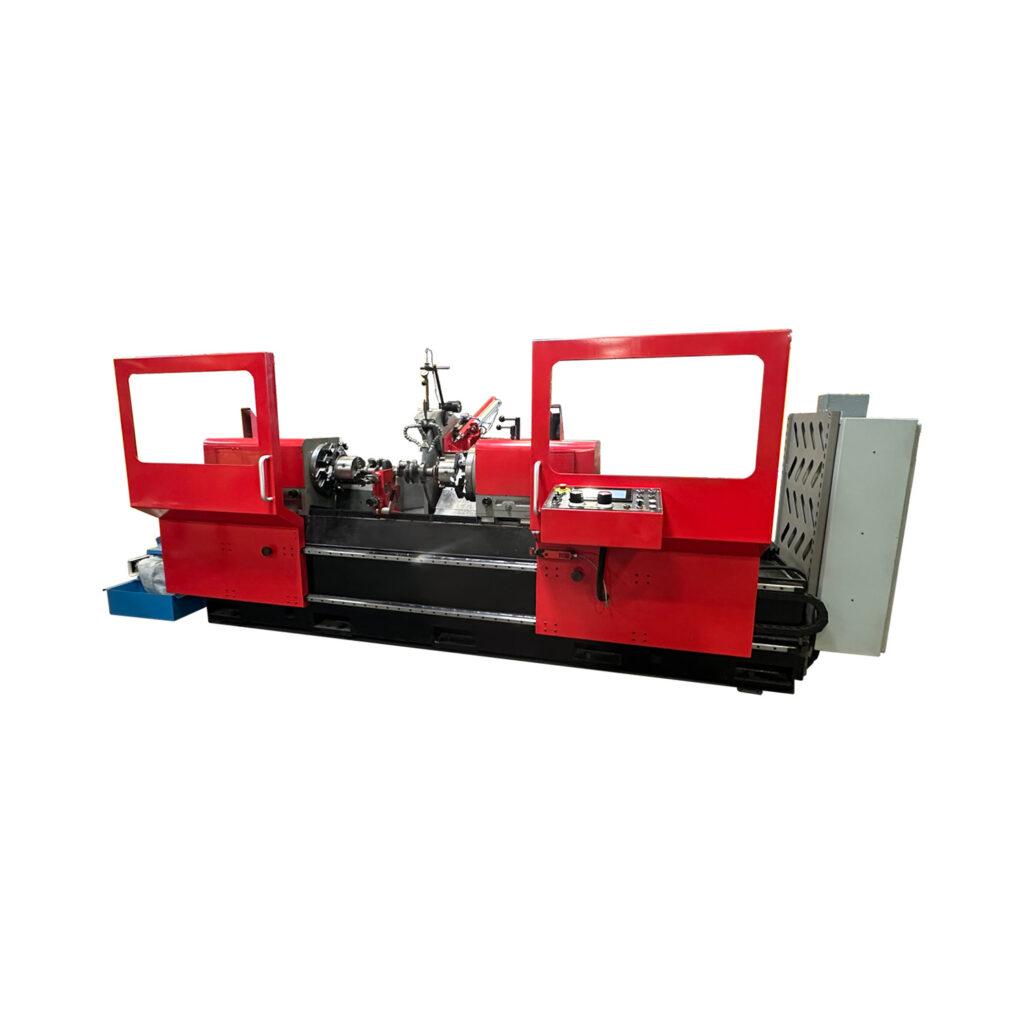
A crankshaft grinder is one of the most important investments an engine rebuilding shop can make. The right machine can improve accuracy, increase productivity, reduce downtime, and help your business remain competitive for years to come.
Unfortunately, many buyers focus only on purchase price and overlook factors that have a much greater impact on long-term profitability.
Whether you’re replacing an aging machine, expanding production capacity, or launching a new engine rebuilding operation, here are the key factors to consider when choosing the right crankshaft grinder.
Start with Your Application
Not all crankshafts are the same.
Before evaluating equipment, determine the types of work your shop performs most often.
Questions to consider:
- Are you rebuilding automotive engines? • Do you primarily handle diesel engines?
- Do you service heavy equipment or industrial engines?
- Are racing and performance engines part of your business?
- What is the largest crankshaft you expect to process?
The answers will help determine the machine size, capacity, and features required for your operation.
Accuracy Matters More Than Speed
While production rates are important, accuracy should always come first.
The purpose of a crankshaft grinder is to restore journals to precise specifications while maintaining proper geometry and surface finish.
Look for equipment capable of delivering:
- Consistent journal dimensions
- Superior surface finishes
- Precise indexing
- Repeatable results
- Long-term accuracy
A faster machine provides little value if it creates rework or scrap.
Evaluate Machine Construction
The foundation of any precision grinder is its construction.
A quality crankshaft grinder should feature:
- Heavy-duty castings
- Rigid machine design
- Precision spindle systems
- Durable wheelhead assemblies
- Reliable lubrication systems
Machine rigidity directly impacts grinding accuracy, vibration control, and long-term reliability.
Consider Service and Support
One of the most overlooked aspects of purchasing a crankshaft grinder is support.
Ask potential suppliers:
- Do they manufacture the machine?
- Are replacement parts readily available?
- Is technical support available?
- How long have they supported their equipment?
- Do they offer training?
A machine is only as valuable as the support behind it.
Downtime becomes far more costly when replacement parts or technical assistance are difficult to obtain.
New vs. Rebuilt Equipment
Many shops face a common question:
Should we purchase a rebuilt machine or invest in a new grinder?
Rebuilt machines often have a lower initial cost, but buyers should consider:
- Remaining machine life
- Parts availability
- Technology limitations
- Reliability concerns
- Future support
A new machine provides the advantage of modern engineering, factory support, and long-term parts availability.
For many shops, the total cost of ownership favors investing in new equipment.
Look Beyond Today’s Production Needs
A crankshaft grinder is a long-term investment.
The machine that meets today’s requirements may become a limitation in five or ten years.
Consider future growth plans:
- Increased production volume
- Larger crankshafts
- Additional service offerings
- New customer markets
Purchasing equipment with room to grow can help avoid costly replacements later.
Reliability Drives Profitability
The most profitable shops understand that uptime is critical.
When a grinder is down, production stops.
Reliable equipment helps reduce:
- Emergency repairs
- Lost production
- Customer delays
- Overtime expenses
- Stress on employees
Choosing a machine known for reliability often delivers a greater return than selecting the lowest-cost option.
Total Cost of Ownership
The purchase price is only one part of the equation.
Buyers should also consider:
- Maintenance costs
- Replacement parts
- Productivity
- Operator efficiency
- Downtime
- Service availability
The lowest-priced machine is not always the most economical choice over its lifetime.
Why American Manufacturing Still Matters
For many machine shops, domestic manufacturing provides important advantages.
American-made equipment often offers:
- Faster technical support
- Easier access to replacement parts
- Direct communication with engineers
- Shorter lead times
- Long-term manufacturer commitment
When a critical machine requires support, having direct access to the manufacturer can make a significant difference.
The Right Grinder Is an Investment in Your Future
Choosing the right crankshaft grinder is about more than replacing a machine.
It’s about improving accuracy, increasing productivity, reducing downtime, and positioning your shop for future growth.
By evaluating machine construction, support, reliability, and long-term ownership costs, engine rebuilders can make an investment that delivers value for decades.
Looking for a New Crankshaft Grinder?
Winona Van Norman manufactures precision crankshaft grinding machines in Wichita, Kansas and supports engine rebuilders throughout North America and around the world.
Contact our team to discuss your application and find the right crankshaft grinding solution for your shop.
Melissa Palmer, Sales Manager